
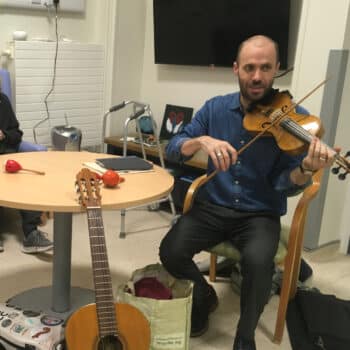
Musician and composer Justin Grounds has spent the year undertaking a research project focused on the connections between music and Dementia.
Justin recently presented his findings to the Arts for Health Artist Team. Here he speaks to Rinku Thomas, Clinical Nurse Manager at Clonakilty Community Hospital, Saoirse Ward, about the project, and its potential benefits in the healthcare setting.
Can you explain the focus of your arts and health research project?
Justin: I am doing a research/practice project learning about the many ways that music can be a beneficial activity for people with various forms of Dementia.
What have been the key moments of your research project so far?
Justin: As a musician and composer who has worked in the field of arts and health for over a decade, and so had quite a lot of experience in making music with people with dementia (both in groups and individually) it has been really fascinating to be able to source and read some of the new clinical studies which have been made, and to really see how these research findings have been reflected so closely in my own practice. It’s really affirmed what I was already doing, and also really inspired and empowered me to keep extending my practice in this field, as it is such a powerful and beneficial activity for people with this condition.
How can learning from this research be brought into the healthcare setting?
Justin: I found the training I did with Sarah Cairns on communication with people with cognitive decline, as well as reading practical books such as “Contented Dementia” by Oliver James, absolutely changed my practice that I brought into the healthcare setting.
The research I have been doing this year more specifically on music and Dementia has really underlined how important and beneficial this is for the residents of the ward, as well as the staff. Listening to, and performing music or singing fires up so many areas of the brain simultaneously that it can have wide ranging benefits, but perhaps one of the most
important ones is that it can activate memories and emotional states that really bring people back to their centre, their fundamental identity. This can be a very reassuring and relaxing state, and I see over and over again how people may start the session quiteagitated and confused, but after a few songs this agitation subsides.
Rinku: Resident-Centered Care
1. Personalized playlists: Creating personalized playlists for residents with dementia can help stimulate memories and emotions, and provide a sense of comfort and familiarity.
2. Resident preferences: Incorporating residents’ musical preferences into their care plans can help personalize their experience, promote engagement, and improve mood.
3. Family collaboration: Working with family members to gather information about residents’ musical preferences and favorite songs can help create a sense of connection and community.
Some potential benefits for residents in long-term care centers:
– Improved mood and reduced agitation
– Increased social interaction and engagement
– Enhanced sense of comfort and familiarity
– Personalized care and attention to individual preferences
By incorporating music into resident care plans, long-term care centers can create a more person-centered and supportive environment that promotes resident well-being and quality of life.
We are so proud that we have an artist like Justin who understands Dementia. Justin is so dedicated in providing individual attention to our residents, taking the time to understand their unique needs and preferences, and tailoring his music sessions to bring joy and comfort to each person.
How do you think this research can benefit your residents?
Our unit is home to residents with mild to moderate dementia, and we’re committed to providing person-centered care that addresses their unique needs and promotes their well-being. Given the focus on non-pharmacological interventions outlined in National Guideline No. 21, music is likely to be a valuable addition to our care approach. By incorporating music into our residents’ daily lives, we can:
– Enhance their mood and reduce symptoms of depression and anxiety
– Reduce agitation and aggression
– Promote social interaction and engagement
– Support cognitive function and stimulate memories
Music has the potential to bring joy, comfort, and a sense of familiarity to our residents, and we’re excited to explore its
benefits further.
What are the next steps for your research project?
Justin: I still have some more articles to read and make notes from, and I’m very honoured to be invited to put all this learning into practice by Rinku at the Saoirse Ward in Clonakilty every fortnight. I will continue this residency, and also plan to have a multimedia presentation ready to present to my fellow artists on the team, later in the year.
What is one of the positives in connecting with Arts for Health artists?
Rinku: The music sessions led by Justin have become the most attended activity in our unit, and it’s a testament to his exceptional performance and ability to engage with our residents.
What’s truly remarkable is the level of enjoyment and participation we’ve witnessed in our residents. It’s rarely seen in our unit that residents attend a session with such enthusiasm and fully immerse themselves in the experience. When Justin passes the instruments and they touch and feel them, it brings them immense joy. This sensory experience, combined with music, provides a unique and therapeutic benefit to our residents.
The high level of attendance and participation speaks volumes about Justin’s talent, enthusiasm, and genuine interest in connecting with our residents. His music sessions have clearly become a highlight of the week, bringing joy and happiness to those who attend.
Kudos to Justin for his outstanding work in the Saoirse unit!
Would you like to add anything more?
Rinku: I think the learning is ongoing, and we will share and learn from experience. We’ll continue to reflect on our observations and experiences with music in dementia care, identifying what works well and what areas need further exploration to enhance the care and support we provide to our residents.
A huge thank you to Rinku and Justin for sharing their thoughts with us!